

This proposal aims to advance a gene replacement therapy for ARSACS based on a proprietary functional sacsin minigene (minisacsinV2) developed by the investigators. The central hypothesis is that delivery of minisacsinV2 using QurCan’s C-TERP nanoparticle platform, either as DNA or mRNA, will restore sacsin function and delay or reverse disease progression when administered to symptomatic ARSACS mice. Previous work from the group demonstrated that AAV9-mediated minisacsinV2 delivery delayed disease onset in presymptomatic mice but failed in symptomatic animals due to insufficient transgene expression. The current proposal seeks to overcome this limitation using a non-viral nanoparticle delivery system capable of crossing the blood-brain barrier and targeting neurons. replacement remains one of the most direct and biologically sound therapeutic strategies.
Subvention : $100 000
Ce projet est cofinancé par le Fonds fiduciaire Richardson, qui apporte une contribution de $50 000.
Durée : un an
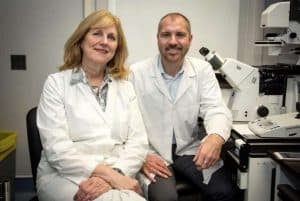
Dr. Benoit Gentil & Dr. Heather Durham
Département de kinésiologie et d'éducation physique, Université McGill
475 Pine Avenue West, Room 210
Montreal, Quebec H3A 2B4
Contact : heather.durham@mcgill.ca ; benoit.gentil@mcgill.ca